
12 Best HR Software for Startups in 2026
Moving past spreadsheets and manual processes is a critical growth milestone for any startup. The right HR software doesn't just manage payroll; it automates onboarding, centralizes employee data, ensures compliance, and frees up your founding team to focus on building the business. But with so many options, from all-in-one platforms to specialized tools, how do you choose the best hr software for startups?
This guide cuts through the noise. We will break down the top HR solutions, analyzing their unique strengths, ideal use cases, and practical limitations to help you find the perfect fit for your stage and budget. Each option is detailed with screenshots, pros and cons, and direct links to help you evaluate it quickly and effectively.
We will also explore how specialized tools like Supatool can fill crucial gaps with custom forms, e-signatures, and workflow automation, integrating seamlessly with your core HR Information System (HRIS) to create a truly efficient people operations stack. This article provides a clear, comprehensive roadmap to building a scalable HR foundation, whether you need a full-suite platform or a targeted solution for a specific challenge. For further insights into top platforms tailored for evolving companies, you may find value in consulting our comprehensive review of the best HR software for small businesses. Get ready to find the platform that will support your team as you scale.
1. Supatool
Supatool earns its top spot as a powerful no-code automation platform that consolidates several critical HR functions into a single, cohesive system. For startups aiming to build scalable processes without a large IT budget, its all-in-one approach to forms, workflow automation, document generation, and e-signatures is a significant advantage. It effectively replaces the need for separate tools, reducing software sprawl and simplifying data flow.
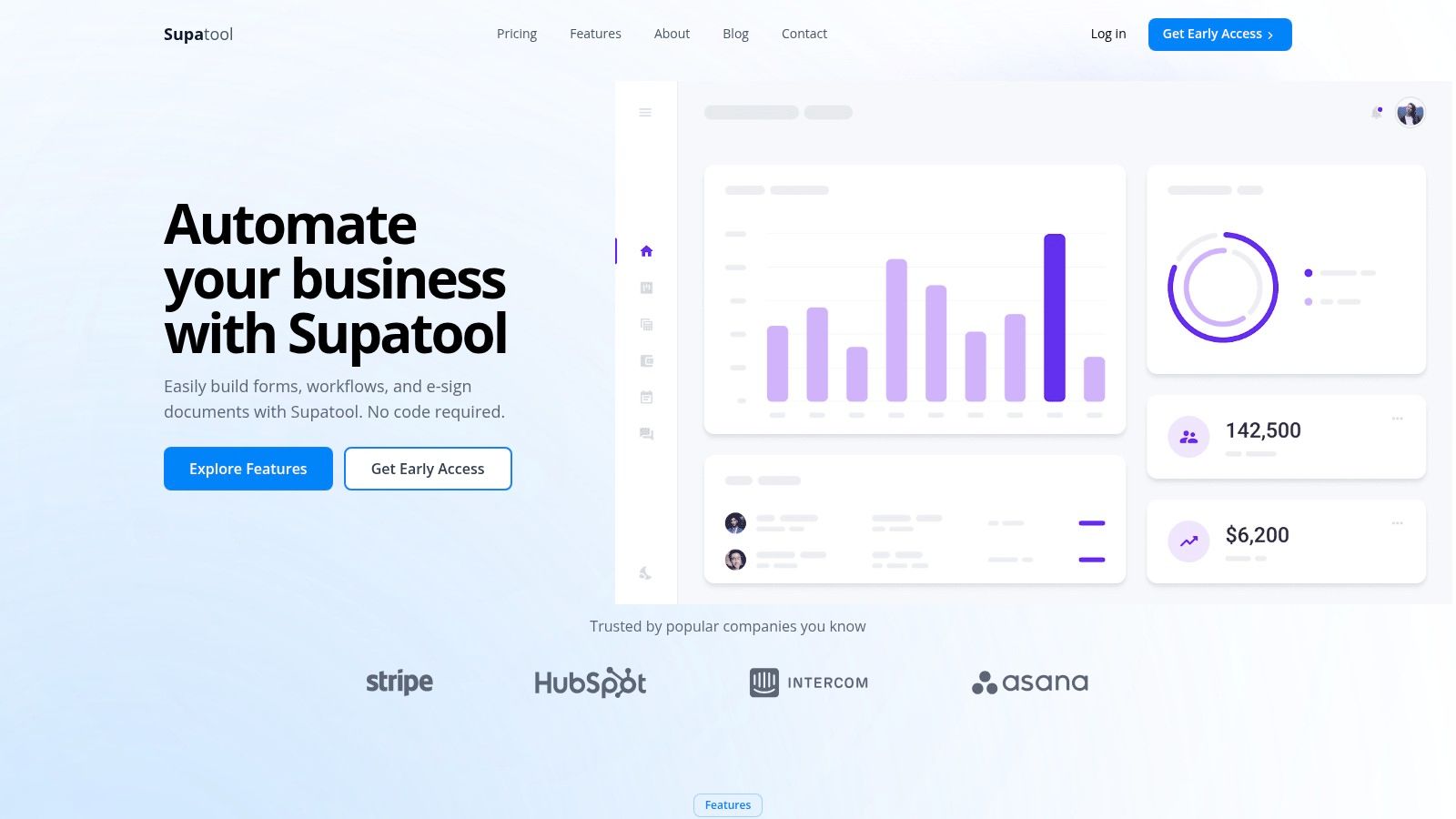
This platform excels at transforming multi-step HR processes into reusable, automated "apps." Its drag-and-drop builder, combined with conditional logic and automated task assignments, makes it one of the best HR software for startups looking to streamline everything from employee onboarding and leave requests to performance reviews and offboarding checklists. The ability to generate documents and collect legally binding e-signatures within the same workflow is a standout feature.
Key Strengths & Use Cases
- Unified Onboarding Experience: Build a complete onboarding workflow, from the initial offer letter (generated and signed) to collecting new hire paperwork, assigning first-day tasks, and scheduling orientation meetings.
- AI-Powered Process Improvement: Supatool’s built-in analytics, including real-time user behavior recordings and drop-off analytics, provide invaluable insights. HR teams can see exactly where new hires abandon a form or struggle with a process, allowing for rapid, data-driven improvements to the employee experience.
- Integrated Payments without Extra Fees: For collecting training fees, company merchandise orders, or even charitable donations, the native integration with Stripe, Authorize.net, and PayPal is a major benefit. Supatool doesn't charge additional transaction fees.
- Offline Capability: Its offline mode is perfect for hybrid teams or employees in the field, ensuring they can complete forms and tasks without a constant internet connection.
Considerations
Supatool is currently promoting "Early Access," so pricing details are not publicly available and require contacting their sales team. While the platform boasts impressive capabilities, startups should perform due diligence by verifying that its e-signature features comply with their specific legal jurisdictions and confirming that any mission-critical app integrations are fully supported before committing.
- Website: https://supatool.io
2. Gusto
Gusto has carved out a niche as the go-to payroll-first HR platform, making it one of the best HR software for startups that prioritize getting payroll right from day one. Its strength lies in simplifying the complexities of U.S. payroll, benefits, and tax compliance, wrapped in a user-friendly interface that doesn't require an HR degree to navigate. This makes it an ideal entry point for founders handling HR tasks themselves.
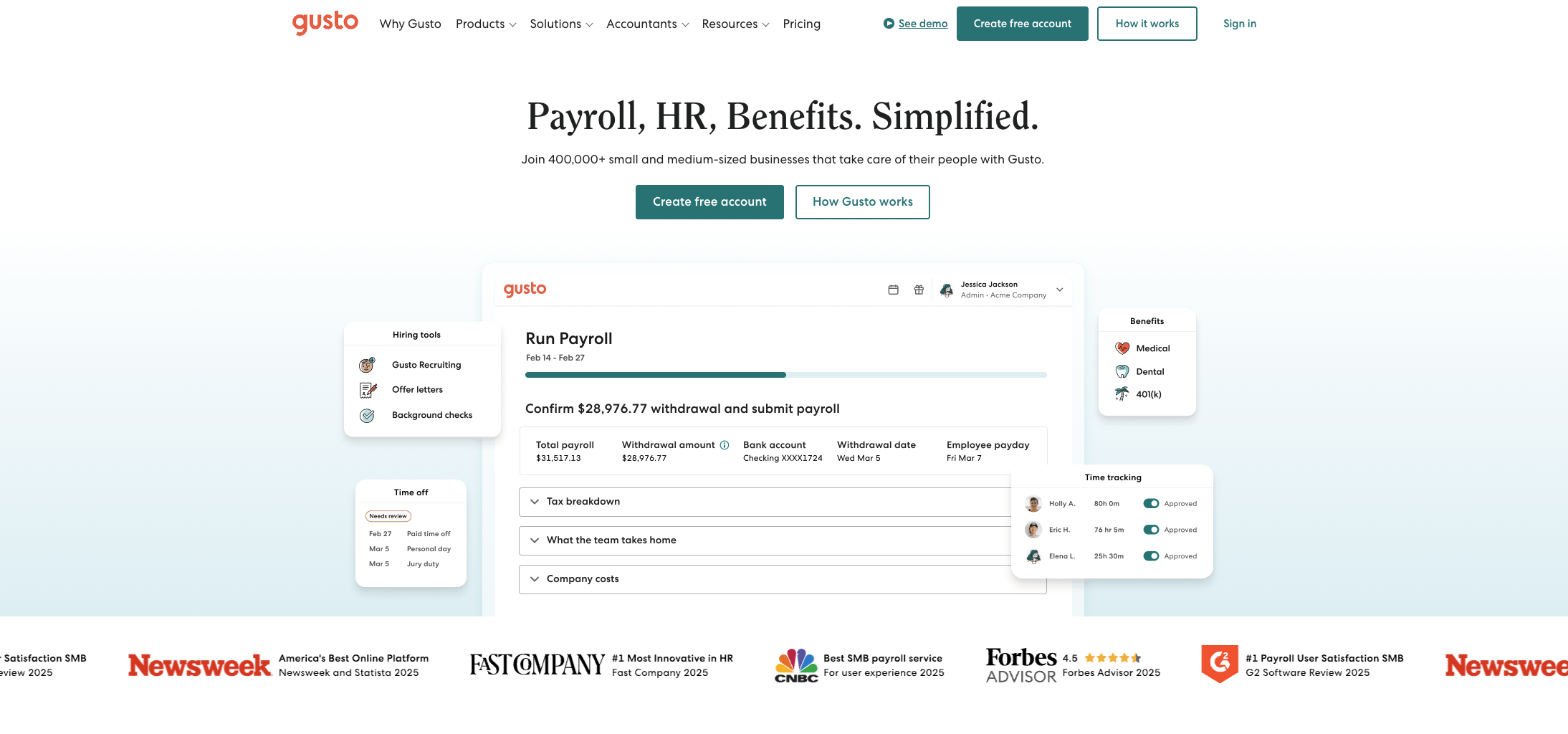
The platform shines for its transparent, public pricing and its well-regarded full-service payroll, which covers tax filings in all 50 states and offers unlimited payroll runs. Basic onboarding, employee self-service, and benefits administration are tightly integrated, creating a seamless experience for new hires. However, its payroll-centric design means that more advanced people operations features, such as performance management or in-depth analytics, are often locked behind higher-tier plans or require add-on purchases.
Ideal Use Case & Key Features
Gusto is best suited for U.S.-based startups with fewer than 100 employees whose immediate, critical need is compliant payroll and benefits administration. It's the perfect "first" HR system for companies graduating from spreadsheets or manual processes.
- Full-Service U.S. Payroll: Handles W-2 and 1099 payments, automated tax filings, and multi-state compliance.
- Integrated Onboarding: Streamlines new hire paperwork, I-9s, and W-4s directly within the platform.
- Transparent Pricing: Plans are clearly outlined on their website, starting with a base fee plus a per-employee monthly cost, which helps startups budget effectively.
- Employee Self-Service: Provides employees with a portal to access pay stubs, update personal information, and manage benefits.
Visit Website: https://gusto.com
3. Rippling
Rippling takes a unique, expansive approach by unifying HR, IT, and Finance into a single platform. This makes it a powerful contender for the best HR software for startups that want to eliminate tool sprawl from the outset. Its core strength is automation that spans departments; for example, onboarding a new hire can automatically trigger payroll setup, app provisioning (like Slack and Google Workspace), and even laptop ordering and shipping. This deep integration creates a single source of truth for all employee data, from their salary to their company-issued devices.
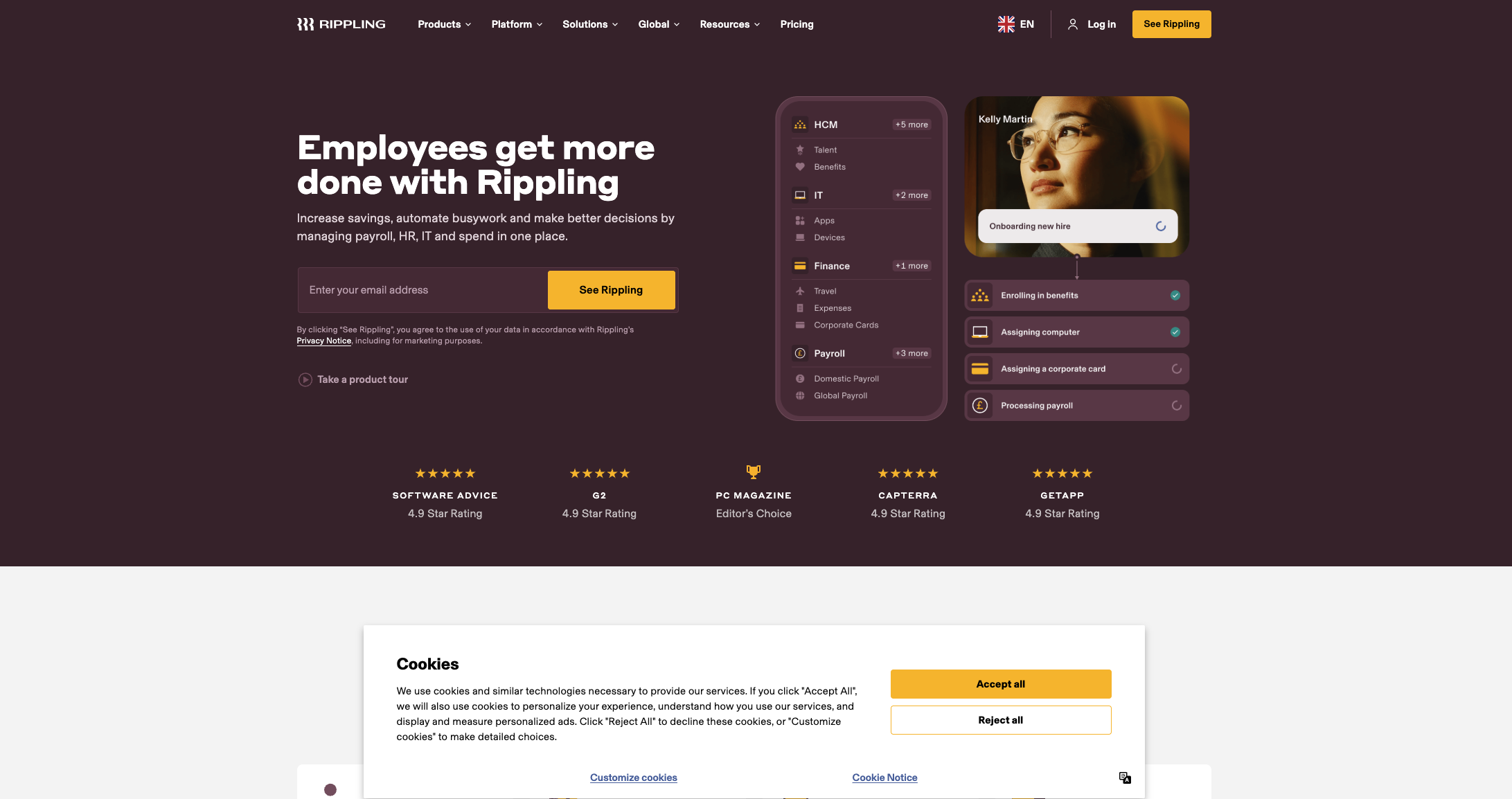
The platform is designed as a core system with modular add-ons, allowing startups to build their ideal stack over time. While this provides incredible flexibility, it also means that pricing is entirely quote-based and can become complex as more modules are added. Rippling's user interface is modern and highly rated, but its all-in-one nature means there can be a steeper learning curve compared to more focused solutions. However, for a fast-scaling company, the upfront investment in setting up these automated workflows can pay significant long-term dividends in operational efficiency.
Ideal Use Case & Key Features
Rippling is best for tech-savvy, fast-growing startups that need to manage not just people but also their devices, apps, and spending in one place. It is particularly effective for companies with remote or hybrid teams where IT and HR processes are deeply intertwined.
- Unified Employee Record: A single system manages everything from payroll and benefits to app permissions and company hardware.
- Powerful Workflow Automation: Automate hundreds of processes, such as onboarding, role changes, and offboarding across HR and IT systems.
- Modular Platform: Start with core HRIS and add modules for U.S. and global payroll, benefits, device management, and spend management as you scale.
- Integrated HR and IT: The ability to manage app provisioning, security policies, and device inventory directly from the HR platform is a standout feature.
Visit Website: https://www.rippling.com
4. BambooHR
BambooHR positions itself as the human-centric HRIS, focusing on people operations rather than just payroll. For startups ready to move beyond basic compliance and build a more structured employee experience, it offers a robust, centralized database for all employee records. Its clean user interface and strong reporting capabilities make it a popular choice for small-to-medium businesses that need organized data and streamlined processes without overwhelming complexity.
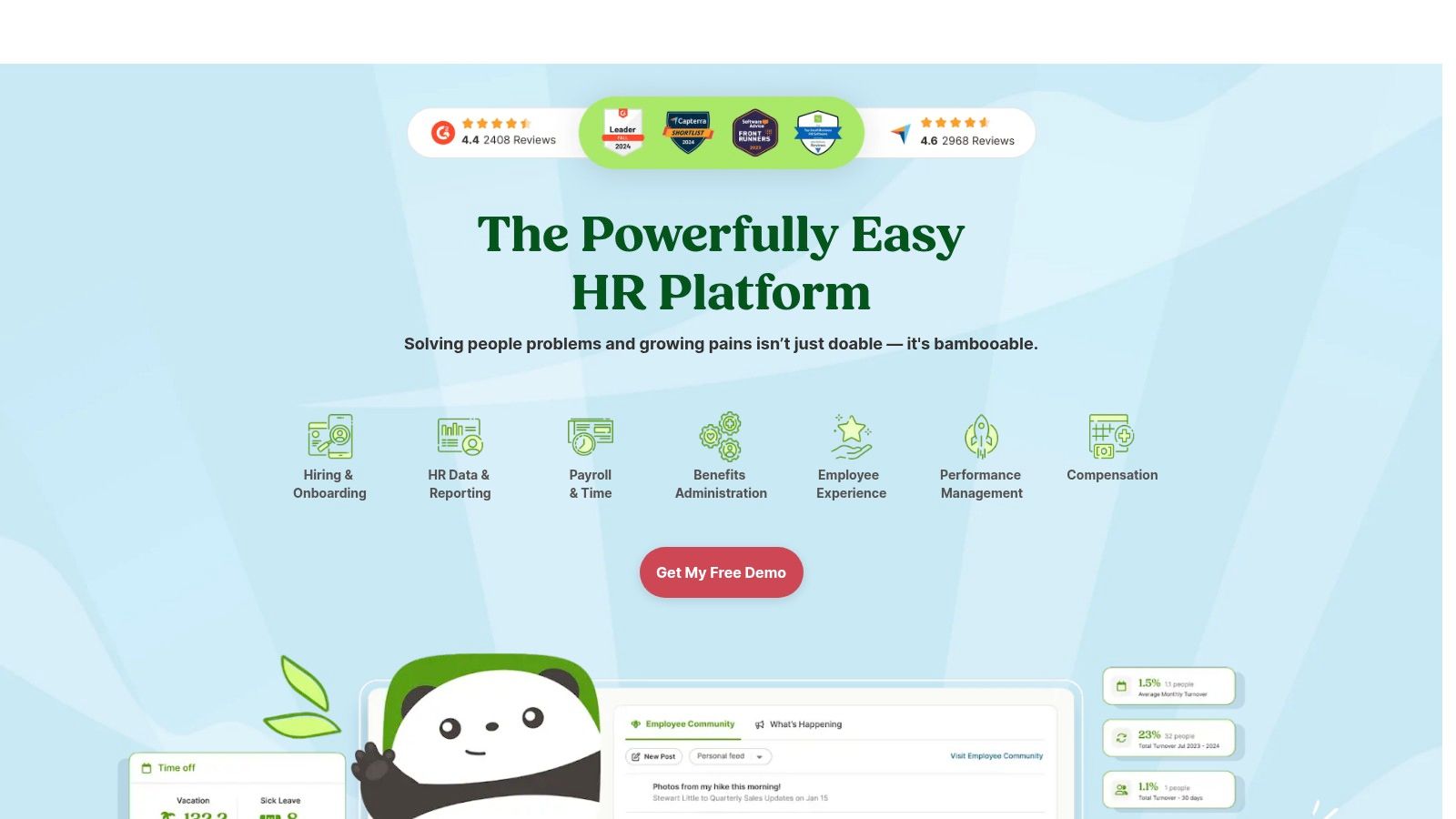
The platform excels at core HR data management, reporting, and creating approval workflows, which are critical for scaling operations. For a deep dive into structuring these processes, you can review this complete workflow analysis roadmap. However, key modules like U.S. payroll and performance management are sold as separate add-ons, and pricing isn't fully transparent, often requiring a direct quote. This model allows startups to buy only what they need but can make initial cost estimation a challenge.
Ideal Use Case & Key Features
BambooHR is ideal for startups that have established their payroll system and are now focusing on building foundational people operations. It's the best HR software for startups needing a single source of truth for employee data, onboarding workflows, and insightful reporting as they scale beyond 20-25 employees.
- Centralized HR Data & Reporting: Consolidates all employee information into one secure database with powerful, customizable reporting dashboards.
- Workflows and Approvals: Automates common HR processes like time-off requests, promotions, and onboarding task lists.
- Employee Experience Tools: Features focused on culture and engagement, such as eNPS surveys and employee well-being assessments.
- Modular Add-Ons: Allows companies to add payroll, performance management, and time tracking as their needs evolve, providing scalability.
Visit Website: https://www.bamboohr.com
5. Deel
Deel has become the undisputed leader for startups building a global, distributed workforce. It solves the immense complexity of international hiring, payroll, and compliance through its powerful Employer of Record (EOR) service and contractor management platform. For startups that need to hire the best talent regardless of location, Deel provides the essential infrastructure to do so legally and efficiently, making it one of the best hr software for startups operating on a global scale.
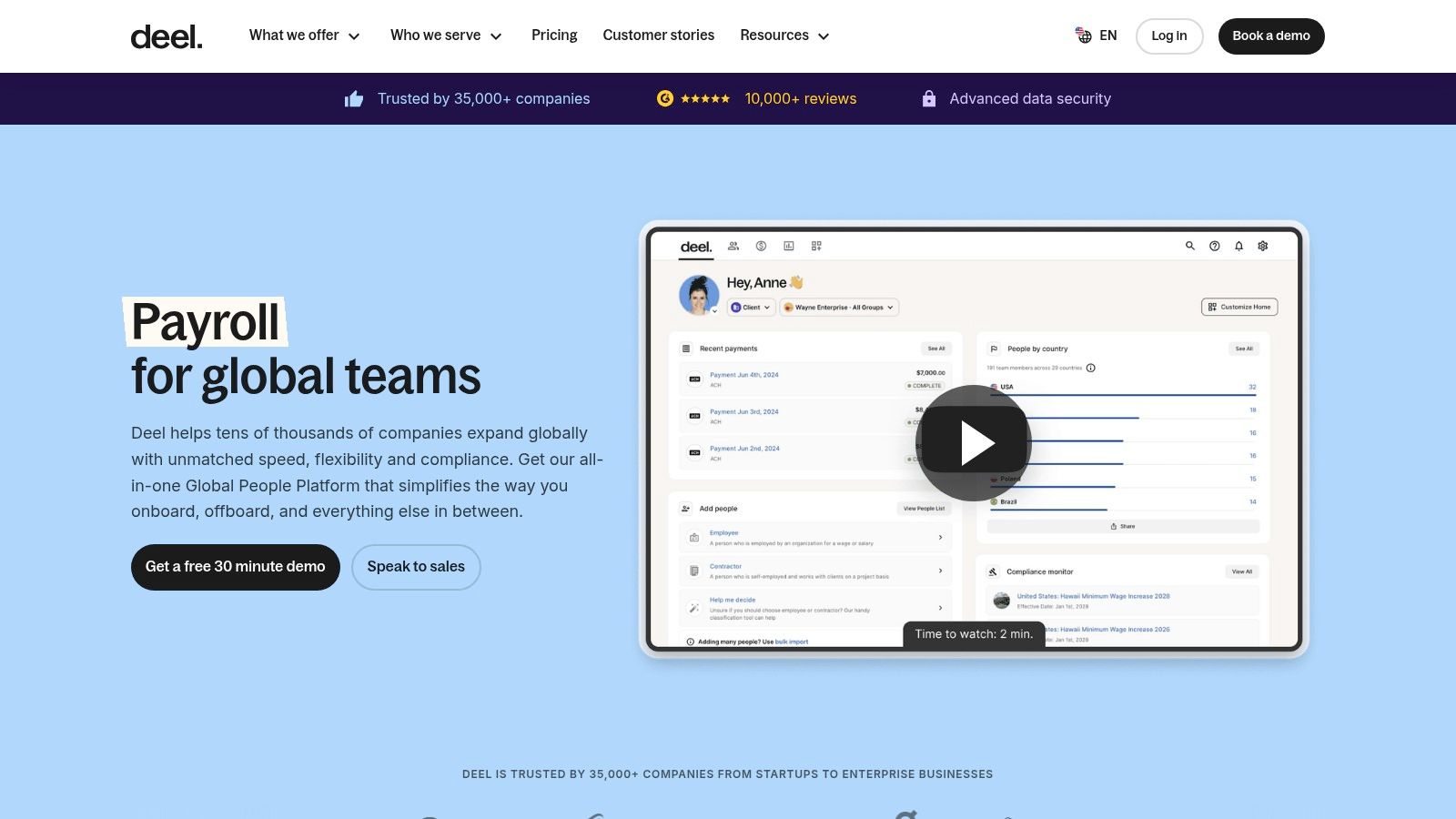
The platform's core strength is its ability to act as the legal employer in over 150 countries, handling local contracts, taxes, and benefits on the startup's behalf. This removes a massive administrative and legal burden that would otherwise be prohibitive for early-stage companies. While its expanding HRIS features are valuable, its primary draw remains its unparalleled global employment services. Startups operating solely within the U.S. might find it more comprehensive than necessary, but for those with international ambitions, Deel is practically indispensable. Its ability to generate compliant contracts and paperwork also places it among the best document automation software solutions for global HR.
Ideal Use Case & Key Features
Deel is best for tech-forward startups planning to hire employees or contractors outside their home country from day one. It's the go-to solution for managing a distributed team across multiple currencies, legal jurisdictions, and compliance frameworks.
- Employer of Record (EOR): Allows you to legally hire full-time employees in 150+ countries without setting up a local entity.
- Global Payroll & Multi-Currency Support: Pay your entire team, both employees and contractors, in their local currency through a single platform.
- Contractor Management: Streamlines onboarding, contract generation, and payments for international contractors while ensuring compliance with local labor laws.
- Transparent Global Pricing: Offers clear, flat-rate pricing for both EOR employees and contractors, simplifying budget forecasting for global expansion.
Visit Website: https://www.deel.com
6. Justworks
Justworks operates as a Professional Employer Organization (PEO), offering a distinct co-employment model that sets it apart from traditional HRIS platforms. This structure allows startups to offload significant administrative burdens, including payroll, HR, compliance support, and, most importantly, access to large-group benefits. For founders who want to offer competitive health insurance and perks without becoming benefits experts, Justworks provides a powerful, all-in-one solution.
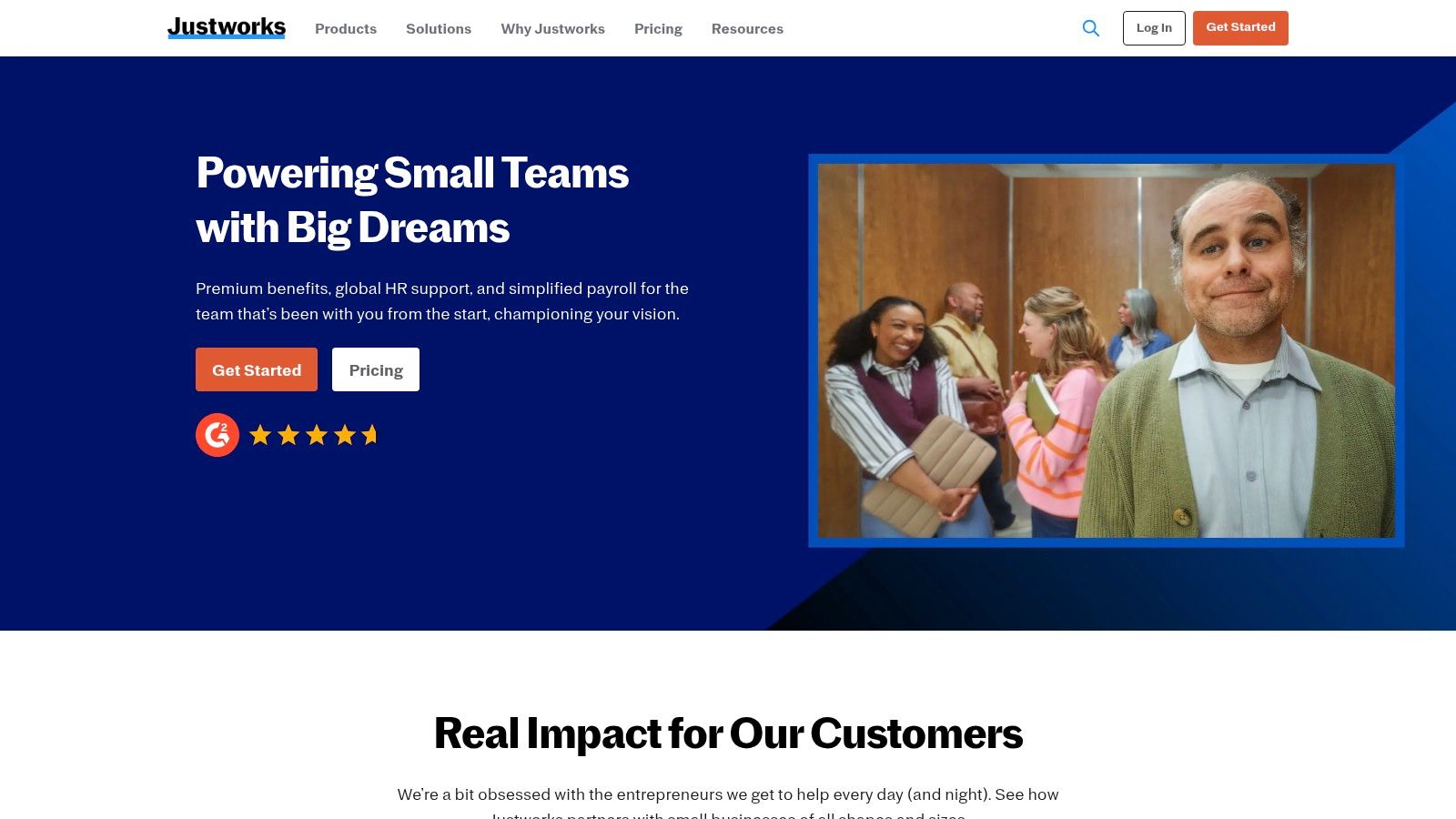
The platform’s strength lies in its transparent pricing and robust 24/7 support, which is a major advantage for lean teams needing expert guidance. While its PEO model can be more costly than a standalone payroll service if you don't need the aggregated benefits, the value of having compliance and benefits management handled by specialists is often worth the investment. Justworks also offers an EOR (Employer of Record) service, making it a viable option for startups hiring internationally.
Ideal Use Case & Key Features
Justworks is the best HR software for startups that want to completely outsource HR compliance and gain access to enterprise-level benefits from day one. It's ideal for companies that prioritize a premium benefits package to attract top talent but lack the internal resources to manage it.
- PEO and Payroll Options: Provides flexibility to choose between a basic payroll plan or full-service PEO tiers that include HR consulting and compliance management.
- Large-Group Benefits Access: The co-employment model gives small companies access to high-quality health, dental, vision, and 401(k) plans at competitive rates.
- Transparent PEO Pricing: Unlike many competitors in the PEO space, Justworks offers clear, public pricing based on a per-employee, per-month fee.
- Compliance and HR Support: Offers certified HR consultants and support for complex issues like state-specific regulations, workers' comp, and unemployment insurance.
Visit Website: https://www.justworks.com
7. Zoho People
Zoho People stands out as a highly modular and budget-friendly HR suite, making it an excellent choice for cost-conscious startups, especially those already embedded in the Zoho ecosystem. Its key attraction is the ability to start with a completely free plan and scale up through various tiers as the company grows. This modularity allows startups to pay only for the features they need, from core HR functions to more advanced performance and engagement tools.
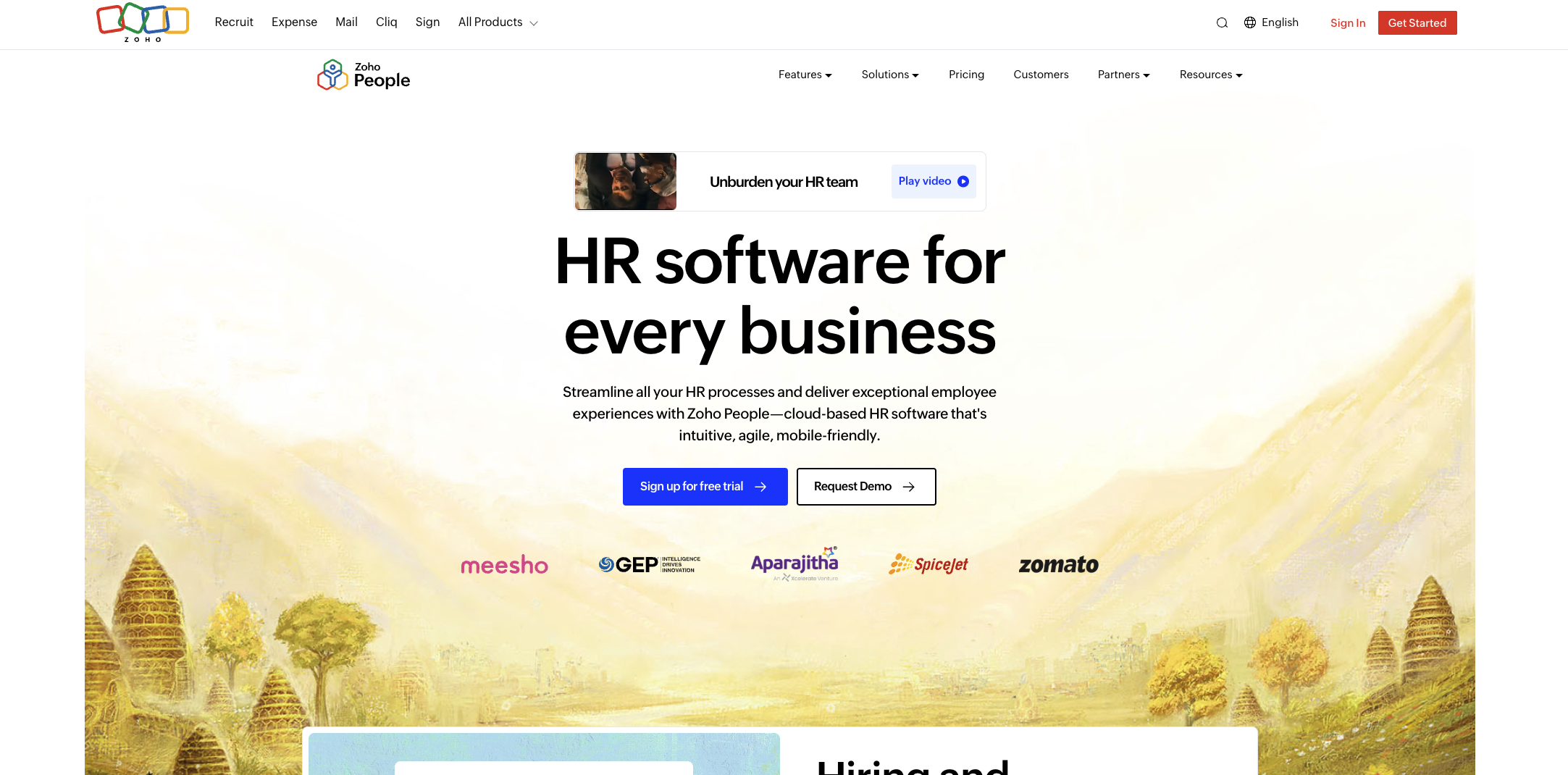
The platform's true power is unlocked when integrated with other Zoho products like Zoho Recruit or Zoho Payroll (U.S. only), creating a unified business operating system. While the feature set is broad for the price, the user interface and support quality can sometimes feel less polished compared to more premium competitors. Advanced workflows might also require purchasing separate Zoho applications or add-ons, which can add complexity to the initial setup.
Ideal Use Case & Key Features
Zoho People is best for startups looking for a low-cost, all-in-one HR solution that can grow with them, particularly those already using or planning to use other Zoho business apps. It's a strong contender for companies that need a customizable system without a hefty price tag.
- Free Edition: A generous free plan for up to five users covers basic employee database management, time-off tracking, and onboarding.
- Modular Pricing Tiers: Allows you to add functionality like performance management, time tracking, and analytics as you scale.
- Zoho Ecosystem Integration: Seamlessly connects with Zoho Payroll (U.S.), Recruit, Expense, and other apps for a consolidated business platform.
- Performance Management Tools: Higher-tier plans offer robust features for goal setting, feedback, and appraisals, which is essential for conducting a comprehensive team performance assessment.
Visit Website: https://www.zoho.com/people
8. Factorial HR
Factorial HR offers a modern, design-forward approach to people management, positioning itself as an intuitive, all-in-one platform for global teams. Its strength lies in its modular structure, allowing startups to select and pay for only the features they need, from core HR and time tracking to talent management. This makes it an adaptable and cost-effective solution for small but growing companies looking for a lightweight system that can scale with them.
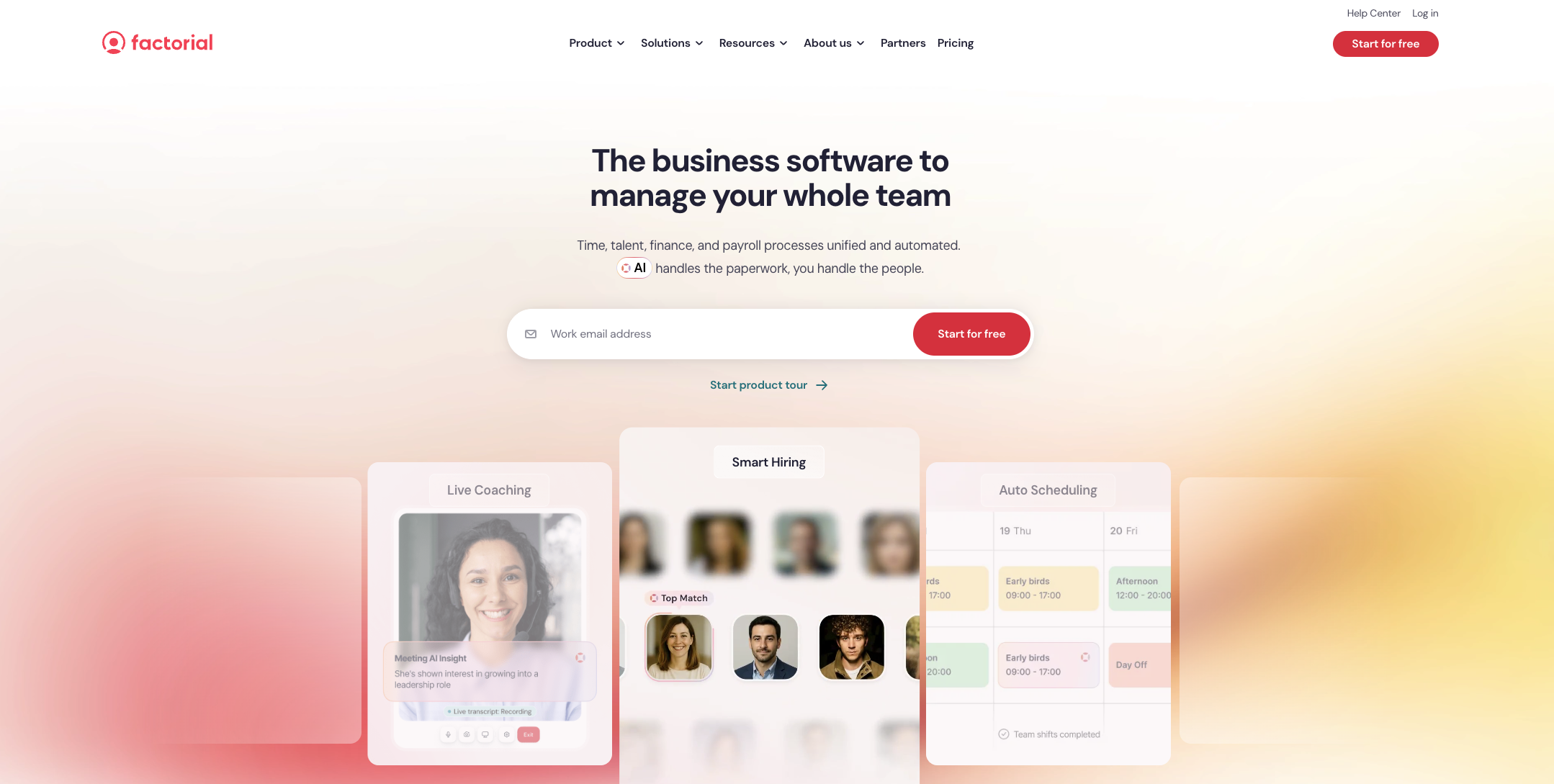
The platform’s clean user interface simplifies tasks like time-off management, document storage, and onboarding, making it accessible for teams without a dedicated HR manager. While its core HR functionalities are robust, startups in the U.S. should note that payroll and benefits administration may require integrations, as its native capabilities are more established in Europe. The total cost can also vary significantly depending on the number of modules a company chooses to activate.
Ideal Use Case & Key Features
Factorial is best suited for globally-distributed or European-based startups that need a flexible, user-friendly HRIS and prioritize a great employee experience. It's a strong choice for teams adopting their first formal HR system that need more than just payroll.
- Modular Platform: Startups can build their ideal HR stack by choosing add-ons for time, talent, and finance, ensuring they only pay for what they use.
- Core HR & Documents: Centralizes employee data, manages onboarding and offboarding, and includes built-in e-signature capabilities for streamlined paperwork.
- Time-Off Management: Provides an intuitive system for employees to request leave and for managers to approve it, with clear visibility for the entire team.
- Global-First Design: Built to handle multiple locations and work policies, making it a good fit for startups with an international footprint.
Visit Website: https://factorialhr.com
9. G2
While not an HR platform itself, G2 is an indispensable research tool for any startup navigating the crowded software market. It’s a B2B software marketplace that aggregates thousands of verified user reviews, allowing you to compare the best HR software for startups based on real-world experiences. For founders without a dedicated HR leader, G2 provides the crowd-sourced wisdom needed to shortlist vendors and understand the practical pros and cons of each solution before committing to a demo.
The platform's true value lies in its detailed, filterable category pages, such as "Core HR for Small Business." You can drill down into ratings for specific features, ease of use, and quality of support, which are critical factors for resource-strapped startups. While it's essential to look past sponsored placements and "Best of" badges, the sheer volume of reviews provides a strong signal of a product's suitability for a small business environment. G2 is not where you buy software; it's where you go to build a confident, well-researched shortlist.
Ideal Use Case & Key Features
G2 is best for the initial research and validation phase of selecting HR software. It’s perfect for startups wanting to compare vendor claims against actual user feedback and discover solutions that genuinely resonate with companies of a similar size and stage.
- Verified User Reviews: Access a large volume of in-depth reviews from real users, often with details on company size and industry.
- Side-by-Side Comparisons: Use grid views to directly compare features, pricing models, and user satisfaction scores for top HR platforms.
- Category-Specific Rankings: Explore curated lists and rankings for specific software categories, helping you find niche leaders and popular choices.
- Pros & Cons Summaries: Quickly understand the most commonly cited strengths and weaknesses of a product, aggregated from all its reviews.
Visit Website: https://www.g2.com
10. Capterra
While not a direct HR platform, Capterra earns its place as an essential starting point for market research. As a massive software directory owned by Gartner, it offers one of the most comprehensive listings of HR software available, allowing startups to scan a wide field of vendors. Its powerful filtering tools are invaluable for narrowing down options based on company size, specific features, and, most importantly, budget constraints, which is critical for early-stage companies.
The platform’s strength lies in its "Shortlist" rankings, which combine user ratings and search popularity to highlight leading contenders. This, combined with a heavy flow of SMB-centric user reviews, provides a grounded perspective on how different tools perform in the real world. While its rankings can sometimes favor more popular, generalist tools over niche solutions, Capterra is unmatched for getting a quick lay of the land and developing a shortlist of potential HR software for your startup before committing to demos.
Ideal Use Case & Key Features
Capterra is best used by startup founders and operations leaders in the initial research phase. It’s perfect for building a comparison list, understanding typical pricing models, and discovering vendors that might not appear in other curated "best of" lists.
- Extensive Vendor Directory: Features hundreds of HR software vendors, from global leaders to niche startups.
- Advanced Filtering: Allows users to narrow down options by essential criteria like pricing model, company size, required features, and deployment type.
- User Reviews and Rankings: Provides access to a large volume of reviews from real SMB users to gauge satisfaction and common pain points.
- Pricing Guidance: Often includes estimated per-user pricing ranges, helping startups create a realistic budget before engaging with sales teams.
Visit Website: https://www.capterra.com/human-resource-software/
11. GetApp
GetApp isn't an HR software itself, but a Gartner-owned marketplace that is an indispensable research tool for startups trying to navigate the crowded software landscape. It's a discovery platform focused on small-business needs, allowing founders and operations leads to filter, compare, and read verified reviews for hundreds of HR tools. This makes it an essential first stop before committing to a platform, helping you find the best HR software for startups based on your specific needs, like critical integrations with your existing accounting software.
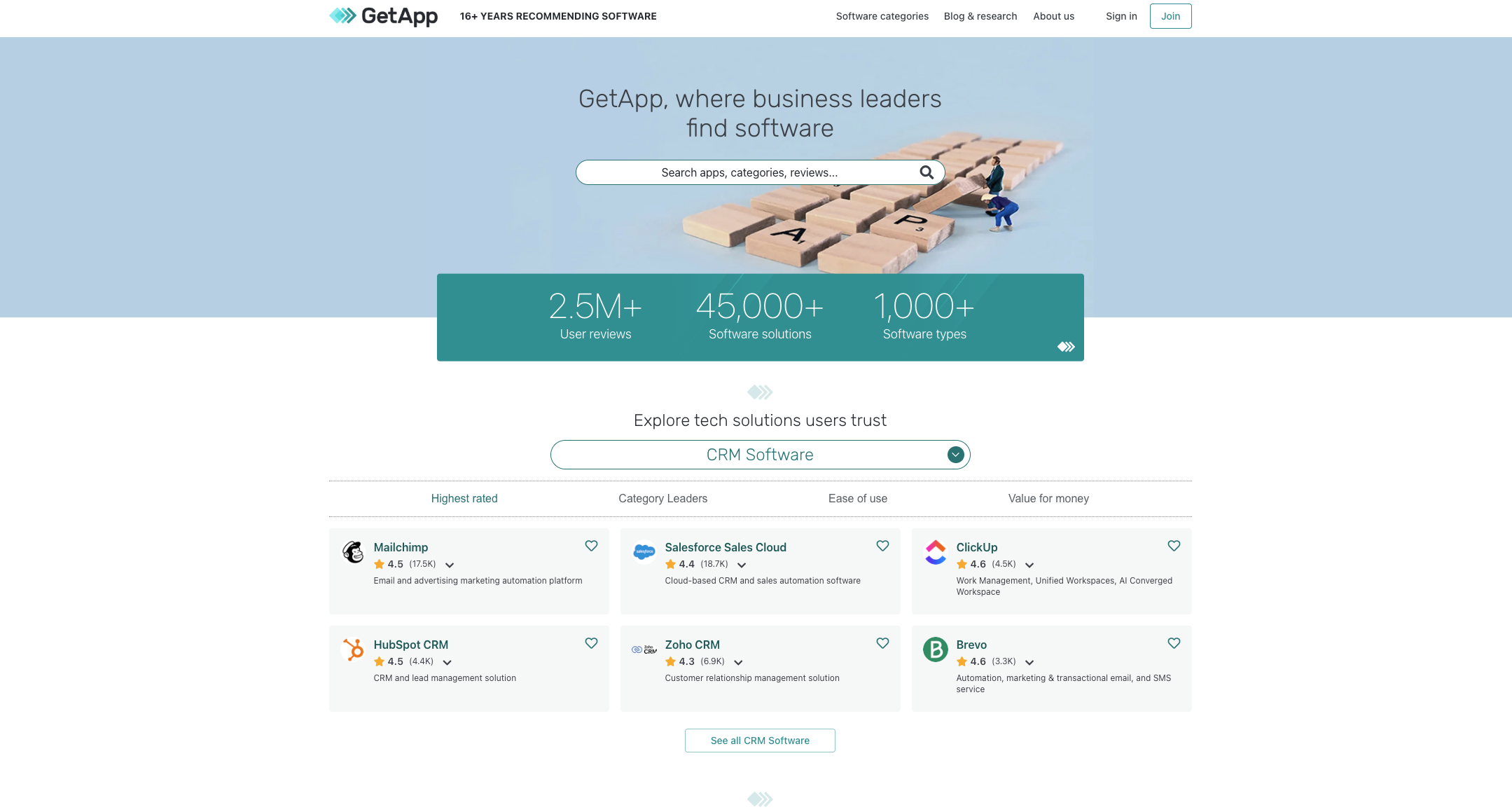
The platform’s strength lies in its practical, detailed filtering capabilities and side-by-side comparison views. Startups can quickly narrow down options that integrate with tools like QuickBooks or Xero, a common and critical requirement. A key differentiator is its free advisor service, where you can have a brief phone consultation to get a personalized shortlist of vendors. While incredibly useful for discovery, it's important to remember that GetApp features sponsored placements, so always scrutinize the listings. The platform is a starting point for research, not a direct seller.
Ideal Use Case & Key Features
GetApp is best for startups in the initial research phase who need to understand the market and create a shortlist of HR software candidates that fit their budget and existing tech stack. It helps you move from "we need HR software" to "these three vendors meet our core requirements."
- SMB-Focused Software Discovery: A comprehensive directory of HR tools specifically categorized and reviewed for small business use cases.
- Practical Filtering System: Allows you to filter solutions by features, pricing models, supported devices, and crucial business integrations.
- Side-by-Side Vendor Comparisons: Provides a clear, feature-based comparison of up to four different HR software vendors at a time.
- Free Advisor Consultations: Offers quick, no-cost phone calls with advisors who can help you identify a few well-suited options based on your needs.
Visit Website: https://www.getapp.com/hr-employee-management-software/human-resources/org/small-business/
12. Software Advice
Software Advice takes a different approach by not being an HR software itself, but a Gartner-owned advisory service that helps you find one. It’s a powerful resource for overwhelmed founders who want a human-assisted, curated shortlist of vendors without spending weeks on research. By understanding your startup’s specific size, budget, and feature needs, their advisors can save you significant time in the discovery phase, making it a unique starting point in the search for the best hr software for startups.
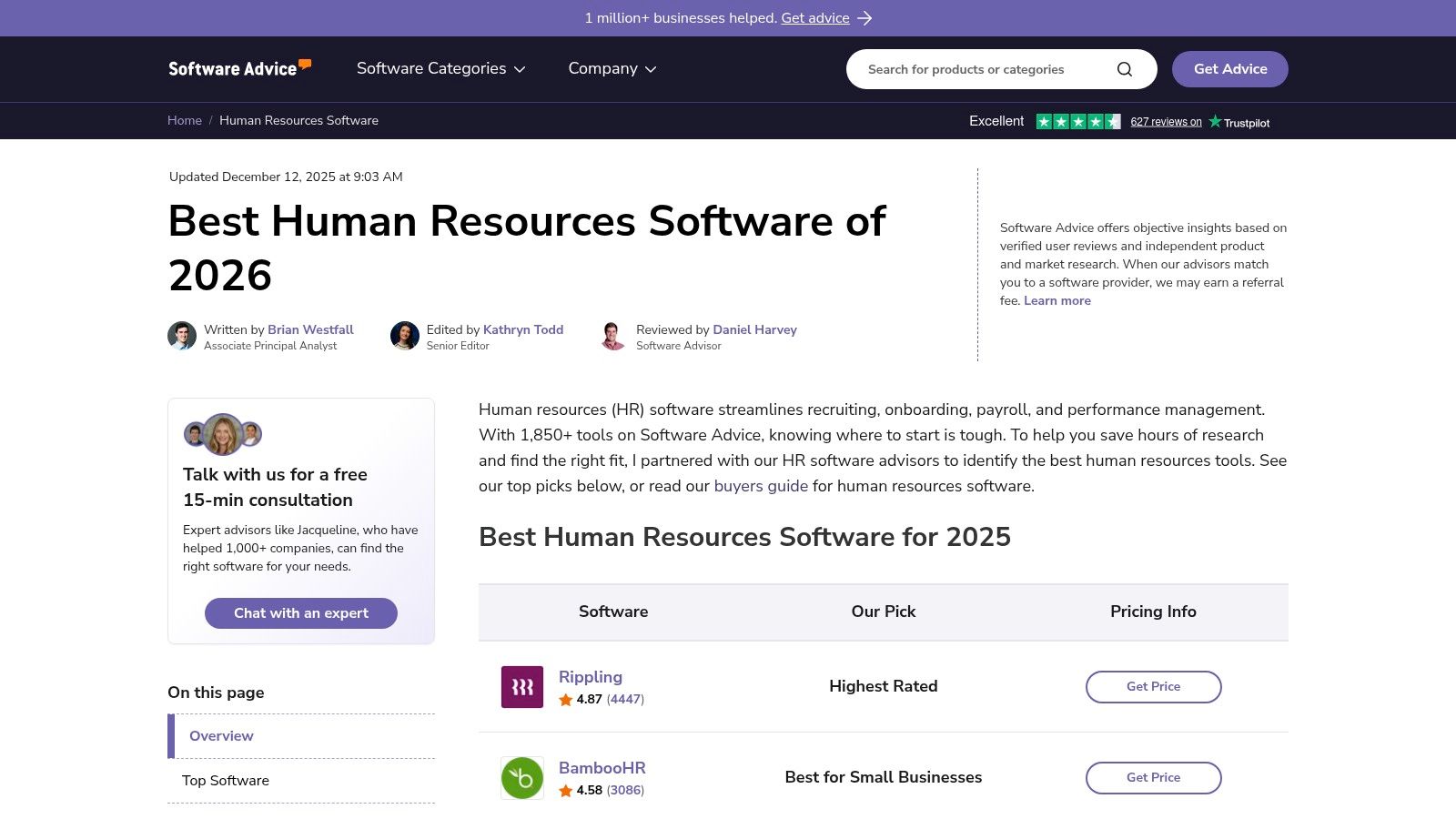
The platform is essentially a matchmaker, connecting buyers with vendors. Their service is free for buyers as they are compensated by software vendors. While this means their recommendations might lean towards established partners, it provides a fast and structured way to get multiple demos on your calendar. Their extensive database of user reviews and side-by-side comparison tools also offers valuable, independent insights to balance the advisory calls and help you make a well-informed final decision.
Ideal Use Case & Key Features
Software Advice is best for startups in the initial research phase that want to quickly identify a handful of relevant HR solutions to evaluate. It’s perfect for leaders who prefer a consultative, human-guided process over sifting through endless online lists and reviews themselves.
- Free 1:1 Advisor Calls: Connect with an expert who will listen to your requirements and provide a tailored shortlist of suitable HR software vendors.
- Curated Buyer Guides: Offers constantly updated guides and articles tailored to small and mid-sized businesses, breaking down the complex HR tech landscape.
- Verified Review Database: Access a large collection of user reviews and ratings to gauge real-world user satisfaction with different platforms.
- Side-by-Side Comparisons: Tools that allow you to compare the features, pricing models, and user feedback of top HR software solutions directly.
Visit Website: https://www.softwareadvice.com/hr/
Top 12 HR Software for Startups — Features & Ratings
| Product | Core features | Target audience | Value proposition | Unique selling points | Pricing transparency |
|---|---|---|---|---|---|
| Supatool (Recommended) | No-code forms & workflows, doc generation, legally binding e-signatures, native payments, 100+ integrations, AI analytics | SMBs & teams (sales, marketing, HR, ops) seeking an all‑in‑one automation platform | Consolidates tools, speeds launches, reduces friction with AI insights | Built‑in payments w/no Supatool fees, offline forms, PDF mapping, AI drop‑off analytics | Early Access — pricing not public; contact sales |
| Gusto | Full‑service U.S. payroll, onboarding, basic HR, time (higher tiers) | U.S. startups needing compliant payroll + basic HR | Easy, payroll‑first HR with clear billing | Transparent public pricing; highly usable for SMBs | Public pricing and add‑on details |
| Rippling | Unified HR, IT & Finance modules, deep onboarding/offboarding automation, payroll | Fast‑scaling startups wanting one source of truth | Centralizes HR + IT workflows and permissions | Device/app management, modular extensibility, heavy automation | Quote‑based; costs scale with modules |
| BambooHR | HRIS, employee records, workflows, reporting, people‑ops tools | SMBs focused on people operations and reporting | Clean UI, strong reporting and employee experience | Flexible terms, volume discounts as headcount grows | Pricing typically by quote; add‑ons extra |
| Deel | Employer‑of‑Record (150+ countries), global payroll, contractor mgmt | Companies hiring internationally / distributed teams | Enables compliant global hiring and multi‑currency payroll | EOR coverage in 150+ countries; clear EOR pricing | Transparent EOR & payroll pricing |
| Justworks | Payroll, PEO options, benefits admin, compliance support | Startups wanting benefits & compliance managed for them | Offloads benefits & compliance with strong support | PEO tiers, 24/7 support, clear payroll/PEO plans | Public pricing for payroll/PEO tiers |
| Zoho People | Core HR, time & attendance, performance, free tier (≤5 users) | Cost‑conscious startups or existing Zoho customers | Low‑cost, modular HR that grows with you | Free entry plan; tight integration with Zoho ecosystem | Competitive, tiered pricing (public) |
| Factorial HR | Core HR, onboarding/offboarding, e‑sign, document mgmt, time off | Very small teams adopting first HRIS | Fast setup with intuitive, design‑forward UI | Built‑in e‑signature, clear starting price | Clear starting price; add‑ons increase total cost |
| G2 | Verified user reviews, category pages, rankings, comparisons | Buyers researching and comparing B2B software | Deep, filterable user feedback for vendor selection | High volume of verified reviews and category insights | Free to use; some sponsored listings may exist |
| Capterra | Software directory, filters, Shortlist rankings, pricing guidance | SMB buyers scanning wide vendor field | Broad coverage for budget and headcount shortlists | Per‑employee pricing ranges & heavy SMB listings | Free directory; vendor quotes often required |
| GetApp | SMB‑focused filters, side‑by‑side comparisons, advisor calls | SMBs needing integration‑aware shortlists | Practical filters + free advisor help to narrow choices | Free phone consults and integration filters | Free to use; vendor quotes required |
| Software Advice | Buyer guides, review DB, free 1:1 advisor calls, comparisons | Startups wanting curated, human‑assisted vendor shortlists | Saves time with tailored recommendations | Free advisor matching and updated SMB guides | Free advisory; vendor pricing via quotes |
Making Your Final Decision: It's About More Than Features
Navigating the landscape of HR software can feel overwhelming, especially when every platform promises to solve all your startup’s people-related challenges. We've explored a range of powerful tools, from comprehensive HRIS platforms like Gusto and Rippling to specialized solutions like Deel for global teams. We’ve also looked at how review aggregators such as G2 and Capterra can provide a wealth of user-generated insights. The central theme is clear: there is no single "best" solution, only the one that is best for your unique stage, culture, and growth trajectory.
Choosing the best hr software for startups is less about finding a tool with the longest feature list and more about adopting a strategic HR tech stack. Your decision today will set the foundation for how you hire, onboard, manage, and retain talent for years to come. It's a choice that directly impacts your operational efficiency and, more importantly, your company culture.
Recapping Your Core Options
Let’s quickly summarize the key takeaways to guide your final choice.
- All-in-One HRIS (Gusto, Rippling, BambooHR): These platforms serve as your central system of record. They excel at core HR functions like payroll, benefits administration, and employee data management. They provide the essential, non-negotiable infrastructure every startup needs for compliance and basic organization.
- PEOs (Justworks): For early-stage startups that need robust benefits and compliance support without an in-house HR team, a Professional Employer Organization can be a strategic co-employment partner, handling the complex administrative burdens so you can focus on growth.
- Specialized and Modular Tools (Deel, Zoho People, Factorial): These solutions often cater to specific needs. Deel is unmatched for managing international contractors and employees, while platforms like Zoho People and Factorial offer modular approaches that let you pick and choose the functionality you need as you scale.
Beyond the HRIS: The Missing Layer of Agility
A critical insight for any fast-growing startup is recognizing that even the most comprehensive HRIS will have gaps. Your internal processes are unique. Your onboarding checklist, performance review cycle, equipment request form, or offboarding workflow won't perfectly match a pre-built template. This is where the true bottleneck appears: you're stuck with rigid, one-size-fits-all processes or forced to manage critical tasks through messy spreadsheets and endless email chains.
This is precisely where a flexible, no-code platform like Supatool transforms your HR stack from a static database into a dynamic operational engine. Instead of waiting for your HRIS provider to release a new feature, you can build the exact tool you need in minutes.
Consider these scenarios:
- You can create a beautiful, branded onboarding portal that integrates with your HRIS, pulling new hire data automatically.
- You can build a custom performance review form that captures qualitative feedback and quantitative ratings, then routes it through a specific approval workflow.
- You can automate the entire document collection process, using e-signatures to handle offer letters, NDAs, and policy acknowledgments efficiently. For a deeper dive into this specific area, this document automation software comparison guide can provide valuable insights into streamlining your HR processes even further.
Your Actionable Next Steps
Making the right decision requires a structured approach. Here’s how to move forward with confidence:
- Define Your Must-Haves vs. Nice-to-Haves: What do you absolutely need today? Payroll and compliance are likely at the top. What will you need in 12-18 months? Think about performance management, ATS, and custom workflows.
- Map Your Core Processes: Whiteboard your key HR workflows, from hiring and onboarding to offboarding. Identify the manual steps, bottlenecks, and areas where automation could have the biggest impact. This map will reveal where an HRIS is sufficient and where a tool like Supatool is necessary.
- Run Targeted Demos: Don't just watch a generic sales presentation. Go into demos with your process map and specific use cases. Ask vendors to show you exactly how their tool would handle your unique onboarding checklist or performance review cycle.
- Think in Layers: The most effective strategy for the best hr software for startups is often a layered one. Select a core HRIS for your system of record and compliance. Then, layer a flexible automation tool like Supatool on top to handle all the custom forms, workflows, and processes that make your company unique. This dual approach gives you both a stable foundation and the agility to adapt and scale without limits.
Ultimately, your HR software is an investment in your people and your future. Choose a foundation that handles the essentials flawlessly, but empower your team with the flexible tools needed to build and automate the processes that will drive your startup forward.
Ready to bridge the gaps in your HRIS and build the custom workflows your startup needs? Supatool is the no-code platform that empowers you to create custom forms, automate onboarding checklists, manage documents with e-signatures, and streamline any internal process. Start building the agile HR engine your company deserves.